The Essential Guide to Lime Handling Equipment
At a Glance
Lime handling equipment plays a crucial role in various industrial processes, particularly in sectors like water treatment, metallurgy, and construction. Understanding the systems that facilitate effective lime handling can significantly enhance operational efficiency and product quality. This comprehensive guide delves into the essential components and functions of lime handling equipment, with a particular focus on lime slaking systems and slurry production.
Lime is a versatile chemical derived from limestone, primarily used for its alkalinity and ability to neutralize acids. The handling of lime, especially in bulk form, presents challenges that require specialized equipment to ensure safety, efficiency, and product integrity. Carmeuse Systems stands out as a leader in this domain, offering innovative solutions that are designed with both performance and reliability in mind.
Importance of Lime Handling Equipment
Efficient lime handling is essential for maintaining the quality of the product. Poor handling techniques can lead to contamination, product degradation, and operational inefficiencies. Lime handling equipment encompasses the systems and machinery designed to transport, store, and process lime. This includes silos, feeders, conveyors, lime slakers, mixing tanks, and pumps all engineered to work together seamlessly.
What are the Key Components of Lime Handling Systems?
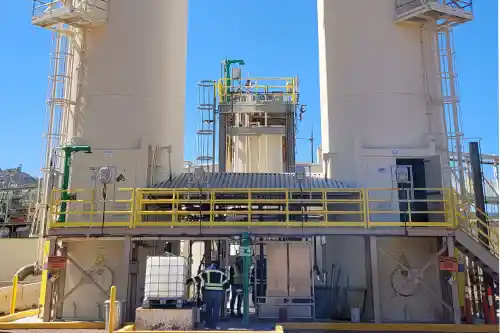
- Storage Solutions: Bulk storage silos are critical for managing large quantities of lime material. These silos are designed to eliminate moisture ingress, prevent contamination, and facilitate easy access for loading and suitable flow promotion for unloading. Their construction materials and design features also help in maintaining the stability of the lime under varying conditions.
- Conveying Systems: Conveyor systems are essential for the transportation of lime from storage to processing areas. Carmeuse Systems utilizes various conveyor types, including belt, screw, and pneumatic transport systems, to ensure that lime is moved efficiently while minimizing dust generation and spillage.
- Feeding Systems: Accurate feeding of lime into processing systems is vital for maintaining consistency in operations. Whether using volumetric or gravimetric feeders, Carmeuse Systems ensures that systems are designed with the precision required for the application, which is crucial for applications like water treatment and other industrial processes.
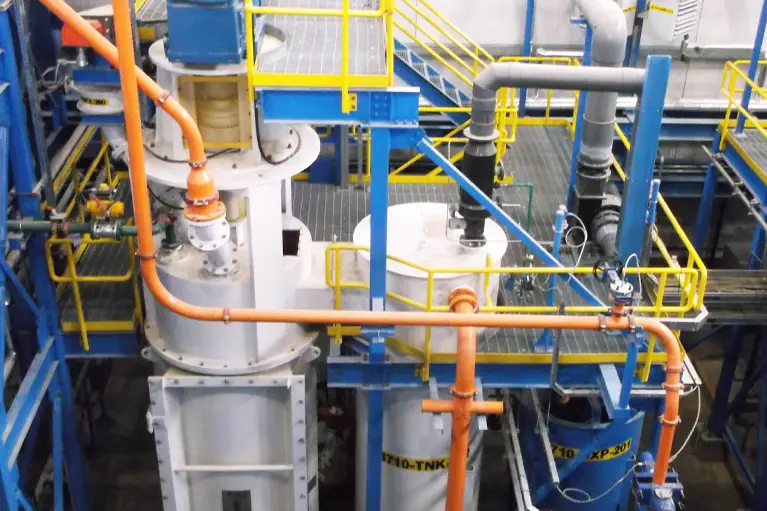
- Lime Slaking Systems: Lime slaking systems convert quicklime into a calcium hydroxide slurry through a controlled reaction with water. Choosing the right slaker type and size depends on the required slurry throughput and the quality of your water and quicklime supply. Reactivity and consistency of the lime supply has a major influence on the appropriate slaker selection, while process throughput determines the appropriate slaker capacity. Water chemistry—temperature, hardness, and impurities—can also affect reaction efficiency and dictate the need for specific slaker designs or auxiliary equipment.
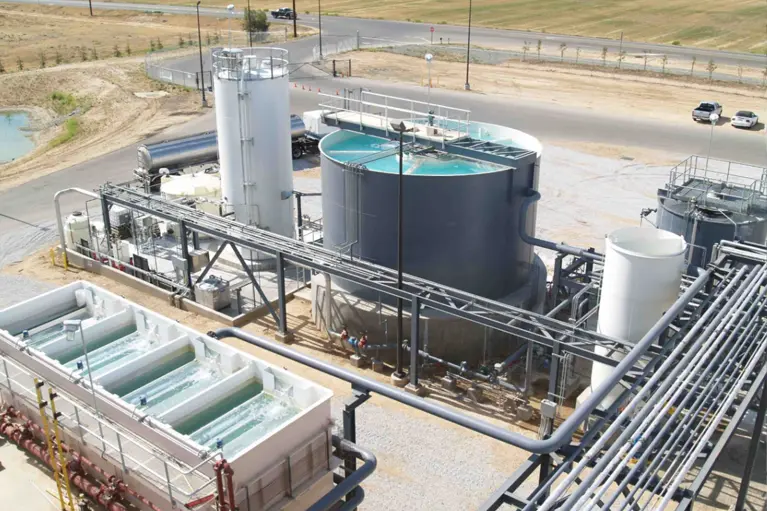
- Mixing Tanks: A mix tank in a lime handling system can serve as a secondary agitation vessel for slurry produced upstream in a lime slaker, or dry hydrated lime can be combined with water directly in the tank to produce a slurry. By supporting both initial mixing and ongoing suspension, the mix tank ensures stable slurry quality and availability for downstream processes.
- Pumps: Pumps in a lime handling system transfer lime slurry from the mix tank to downstream processes with consistent pressure and flow. They are designed to handle abrasive materials and maintain reliable movement of slurry through the system. By ensuring steady delivery, pumps support accurate dosing, prevent settling in pipelines, and keep the entire lime handling operation running smoothly and efficiently.
The Slurry Production Process
Producing a consistent and high-quality slurry involves several steps, each of which must be carefully controlled. To begin the slaking process, lime and water are fed into a slaker. The ratio of these components is critical, as it influences the viscosity and reactivity of the final slurry. As the water and quicklime combine, it causes an exothermic reaction. Temperature of reaction has a direct impact on the quality of the final slurry, so it is important to maintain an optimal slaking temperature throughout the process. A complete reaction also requires agitation and sufficient retention time to ensure full hydration and proper slurry formation.
After slaking, the slurry must be transported to storage tanks or directly to the application point. This requires efficient pumping systems capable of handling the viscosity of the slurry while maintaining the integrity of the product. Carmeuse Systems provides advanced pumping solutions that are designed specifically for lime slurry, ensuring that the material is moved without risk of settling or dilution.
Safety Considerations in Lime Handling
Handling lime and lime slurry presents unique safety challenges. Quicklime, when it encounters moisture, can produce caustic reactions that may harm operators or damage equipment. Therefore, it is essential for all lime handling systems to incorporate safety features such as dust suppression, spill containment, and proper ventilation.
Training operators on the safe handling of lime is equally important. Understanding the properties of lime and how to respond to potential hazards can dramatically reduce the risk of accidents. Carmeuse Systems emphasizes the importance of safety protocols, underscoring critical hazards such as the intense heat of reaction and the safe management of hot slurry, and provides comprehensive training resources to ensure that personnel are well‑prepared.
What Are the Advantages of Optimized Lime Handling Systems?
Investing in high-quality lime handling equipment can yield significant returns for organizations. Key advantages include:
- Reliable Slaking Performance: Properly engineered systems ensure consistent water‑to‑lime ratios, controlled retention time, and thorough agitation—resulting in complete hydration and stable slurry quality. Well-slaked lime will be more reactive, requiring less chemical to achieve the same results.
- Improved Process Efficiency: Efficient material feed, dust‑controlled transfer, and continuous slurry movement reduce clogs, settling, and downtime across the entire lime handling process.
- Consistent Slurry Quality: High‑quality mixing and slaking equipment produces uniform slurry concentrations and particle dispersion, which is essential for accurate pH control and chemical dosing.
- Reduced Maintenance and Operating Costs: Durable components designed for abrasive lime products minimize wear, extend equipment life, and lower both planned and unplanned maintenance costs.
- Enhanced Environmental and Worker Safety: Dust‑tight conveyors, feeders, and transfer points help control lime dust, improving plant safety and supporting regulatory compliance.
Conclusion
As industries continue to evolve, the demand for quality lime handling equipment will only increase. Carmeuse Systems, with its extensive expertise in designing and supporting bulk chemical storage and handling systems, stands at the forefront of this evolution. By investing in advanced lime slaking systems, slurry production technologies, and high-performance lime slakers, organizations can ensure operational efficiency and product quality.
In summary, understanding the intricacies of lime handling equipment, from storage to slaking, is essential for any organization that relies on lime as a critical component of its processes. With the right equipment and procedures in place, businesses can achieve higher efficiency, improved safety, and superior product outcomes.
Oops! It looks like you are missing a required setting. Please check your component settings before publishing.

About the Author
Darren Farnworth has more than two decades of expertise in bulk material handling and lime system design. Throughout his career with Carmeuse Systems, he has held key roles in Project Management, Applications, Sales, and Engineering Management, giving him a comprehensive understanding of lime storage, handling, and slaking systems.
A mechanical engineer by training, Darren holds a B.A.Sc. in Mechanical Engineering from the University of British Columbia and has built a career specializing in dry chemical conveying, storage solutions, flow promotion, feeding technologies, and slurry handling. His work spans numerous industrial applications, including power generation, mining, municipal water treatment, and oil & gas.
Related Blogs
September 29, 2025
Upgrading Bulk Material Handling Systems
Retrofitting an existing system is often less expensive and disruptive when compared to a full system replacement.
January 24, 2024
Lime Slurry Handling: A Good Practice Guide
This is a good practice guide for safe and efficient delivery, offloading and storage of lime slurry. Ready-to-use lime slurry can help eliminating the challenges posed by handling dry lime products.

August 08, 2025
Pre-engineered Quicklime System Walkthrough
Discover our modular quicklime slaking system. Its four-piece design, pre-assembled for quick setup, reduces construction time and shipping costs.